BYD Atto 1: Small Package Big Fun



Small cars have always had a special place in our market, especially for those of us who grew up in the late 90s and early 2000s.
Back then, owning something like a Maruti 800, Hyundai Santro, Maruti Zen, or even the little Tata Nano simply meant you finally had your first set of wheels. A small car’s job was straightforward — be affordable, be reliable, take the family around, and that was pretty much it.


Looking through old auto magazines from the mid-2000s reminds us of that era. Models like the Alto were topping the charts, the Reva was quietly introducing the idea of electric mobility, and reviews praised cars for things like fuel economy, low running costs, and durability. That’s really all small cars were expected to offer.

Most accessible cars need to check more boxes. It’s no longer just about “getting the job done.” A modern small car also has to look good, feel modern, offer tech, safety, and a sense of style — much like how basic smartphones replaced the old dumb phones.
So where does the BYD Atto 1 fit into this new expectation for small cars? Let’s take a look.

EXTERIOR
The BYD Atto 1 is built around the same visual identity seen across BYD’s current lineup in Nepal — the brand’s signature “Dragon Face 3.0” language.
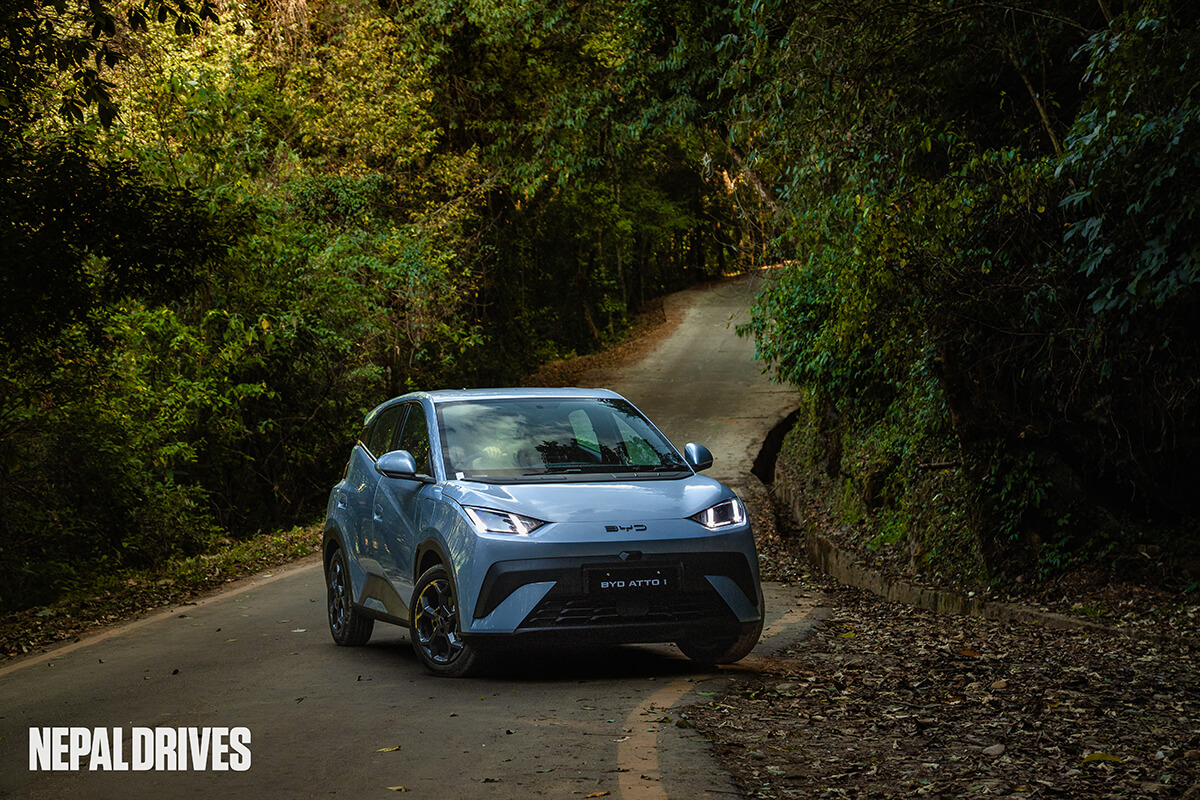
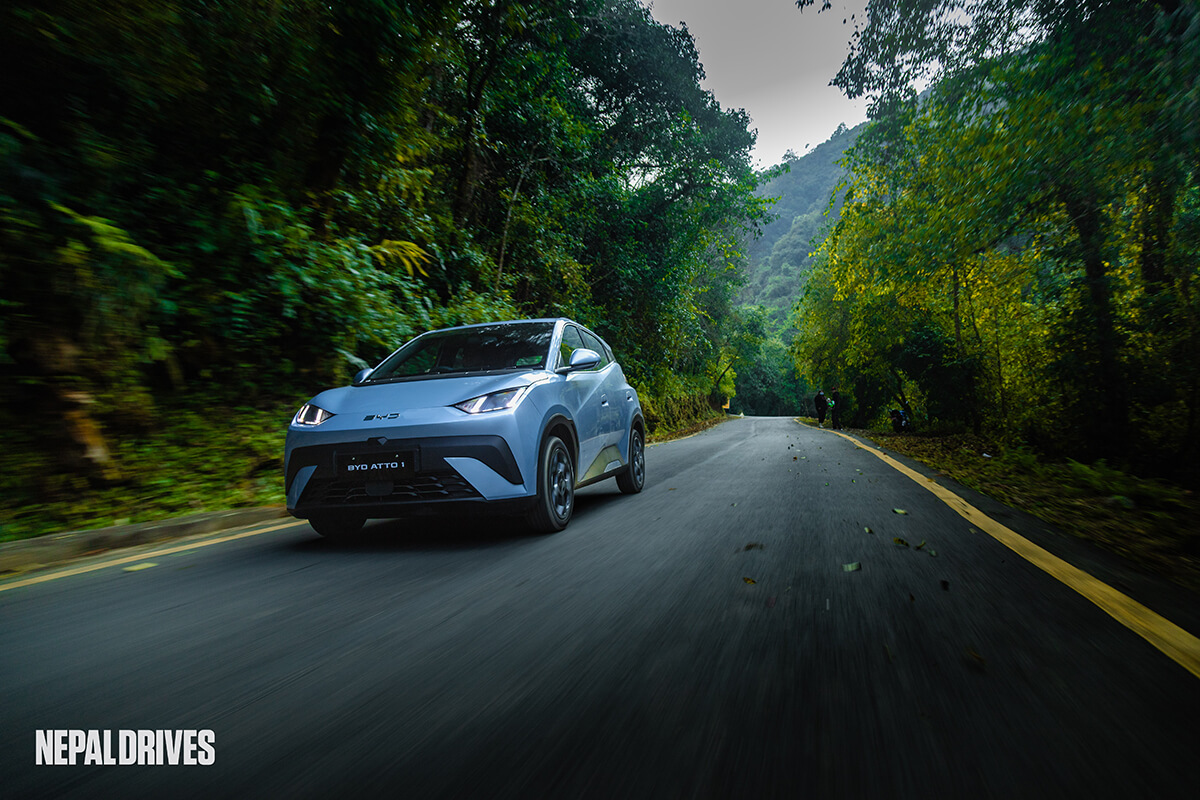
At a glance, it feels compact but not timid. Its tidy dimensions make it ideal for city driving, while a slightly elevated stance adds a hint of crossover attitude. That extra ground clearance gives it a mildly rugged vibe, setting it apart from a conventional hatchback.
At the front, the Atto 1 adopts the typical EV approach with a sealed-off grille, flanked by sleek LED headlights with integrated DRLs. The lighting signature, inspired by a seagull in motion adds a bit of character.
Down below, the bumper incorporates practical air inlets surrounded by black cladding, which introduces contrast and reduces the visual bulk of the painted surfaces.
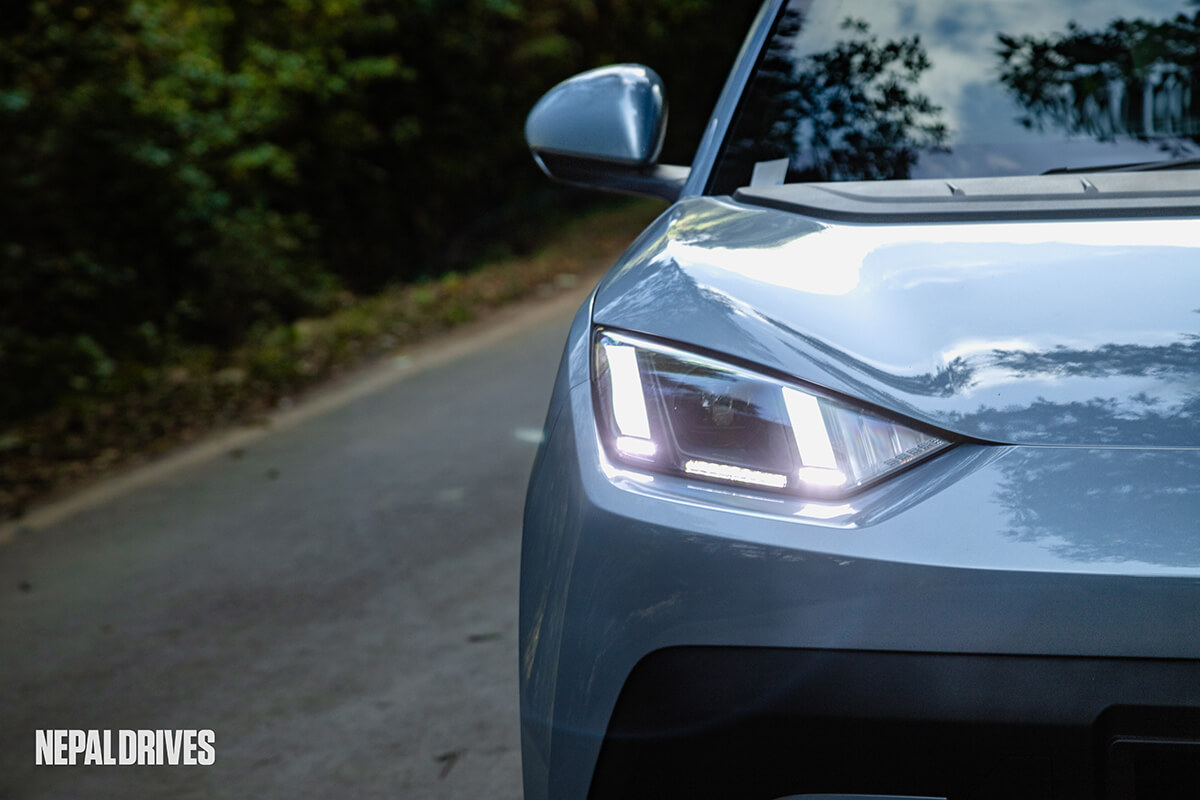
The bonnet is short and subtly contoured, contributing to a front fascia that appears clean and aerodynamically shaped. Like most modern EVs, the overall nose design is minimalistic and smooth.
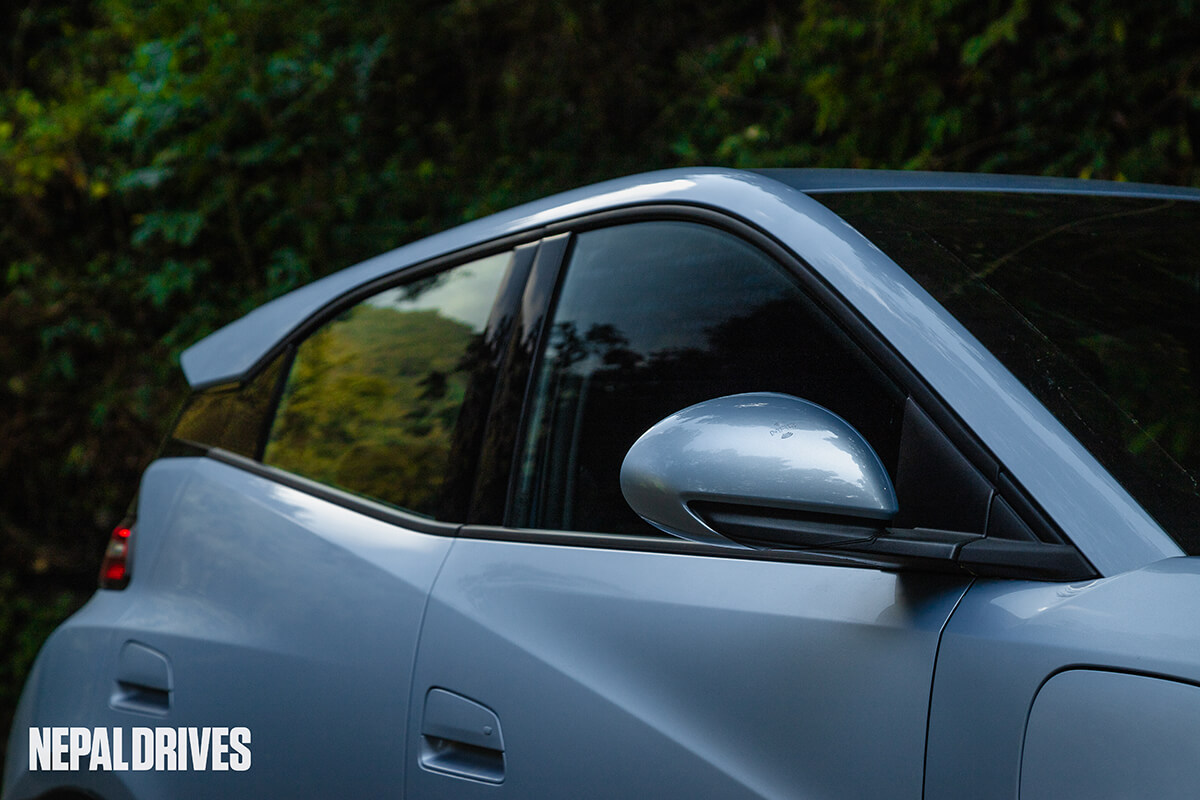
From the side profile, the Atto 1 leans toward a sportier appearance. Its 2500 mm wheelbase gives it well-proportioned dimensions for a car of this class. It sits on 16-inch alloy wheels, and notably, the Nepal-spec version benefits from increased ground clearance compared to the global model — a practical move considering local road conditions.
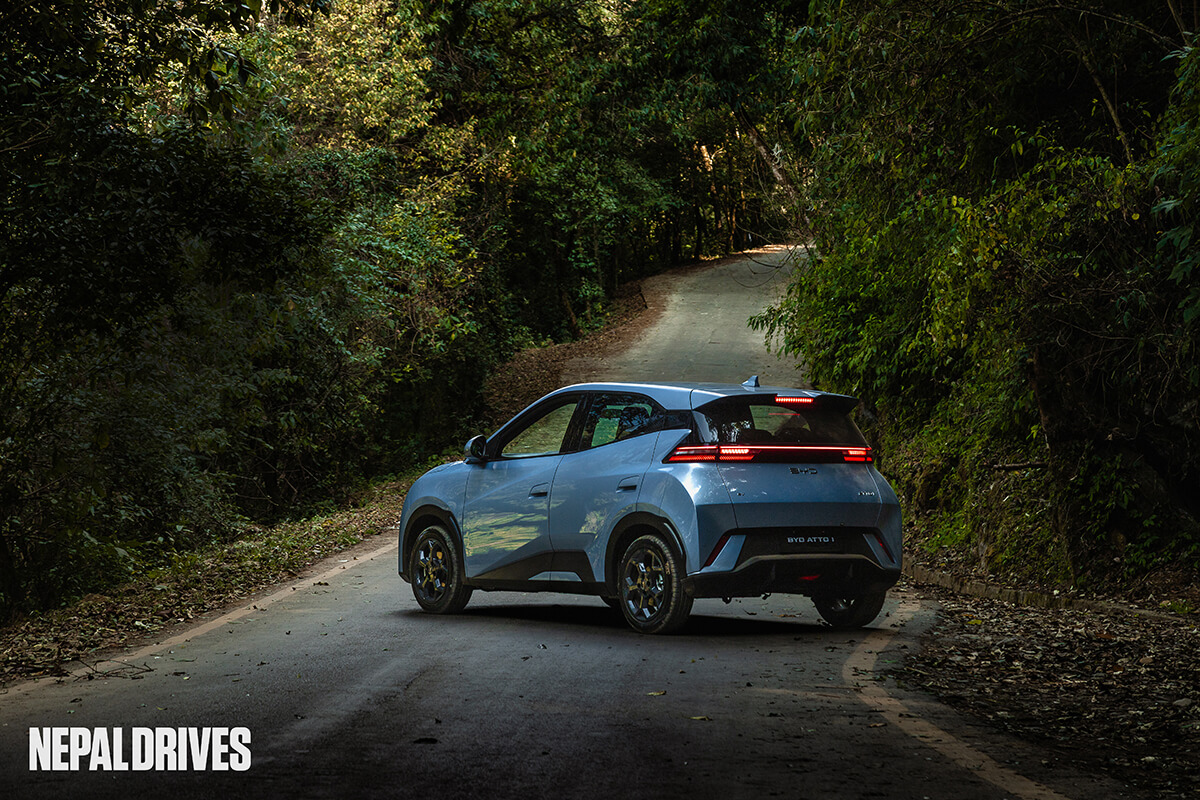
A gently rising beltline flows toward the rear, forming a slight wedge effect. At the same time, the design leaves enough visual breathing room around the C-pillar, preventing the side profile from feeling too cramped. Subtle contrasting trim elements, similar to those at the front, are also present along the side to break up the body color and add a bit of visual interest.
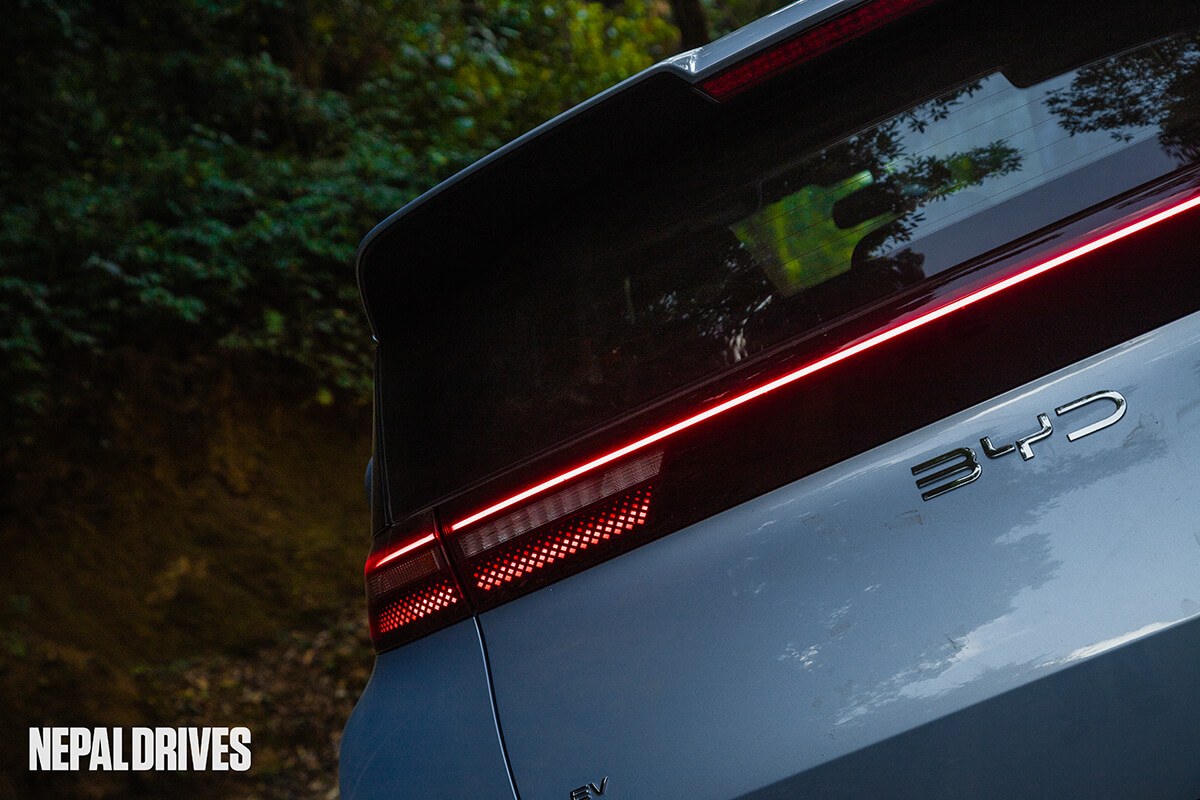
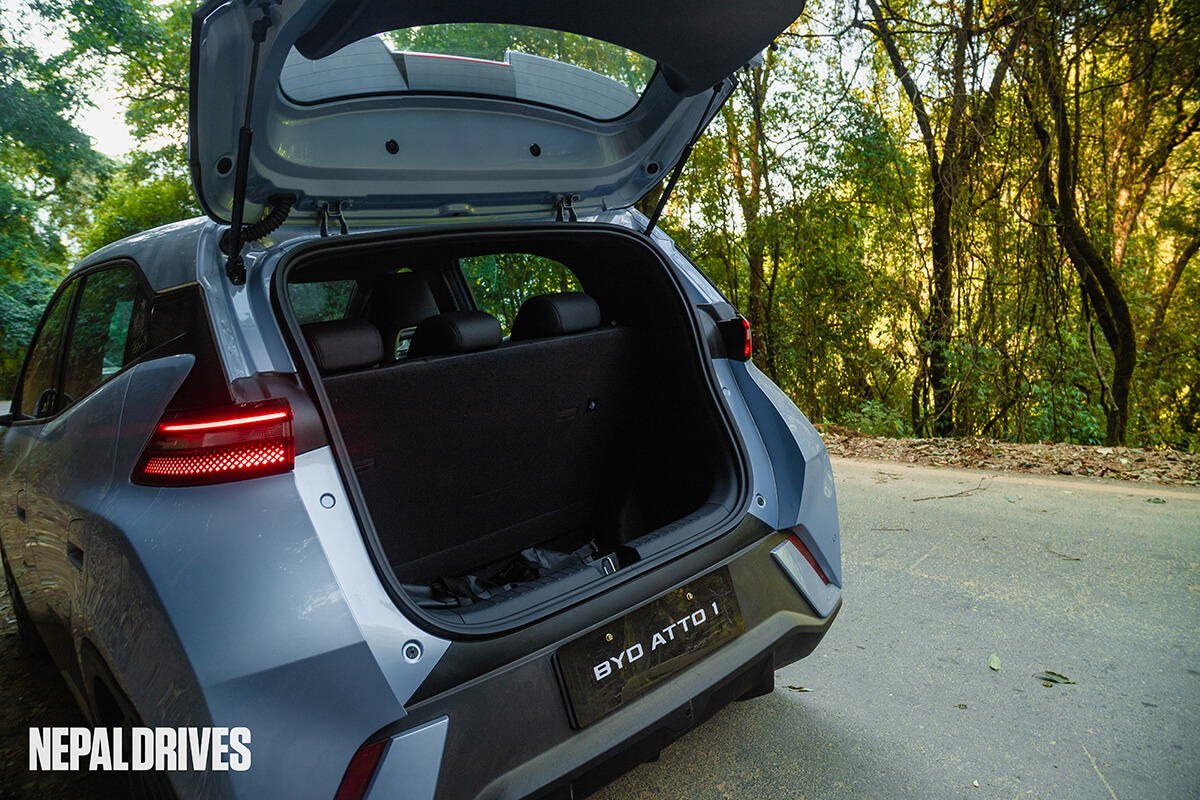
At the rear, the design remains straightforward yet distinctive. The upright, slightly boxy tail section is complemented by full-width LED taillights, lending a more upmarket impression.
For the Nepali market, the Atto 1 is available in four color options: Blue, White, Black, and Green. As much as the Green catches everyone’s attention, it is Black that stands out, visually shortening the car giving it a slightly sportier presence.
INTERIOR
Step inside the Atto 1 and you’ll immediately notice its familiarity. The overall layout clearly draws inspiration from its bigger sibling, the Dolphin.
Elements like the steering wheel design, center console buttons, gear selector, and even the digital instrument display closely resemble what we’ve already seen there, giving the cabin a cohesive BYD family identity.
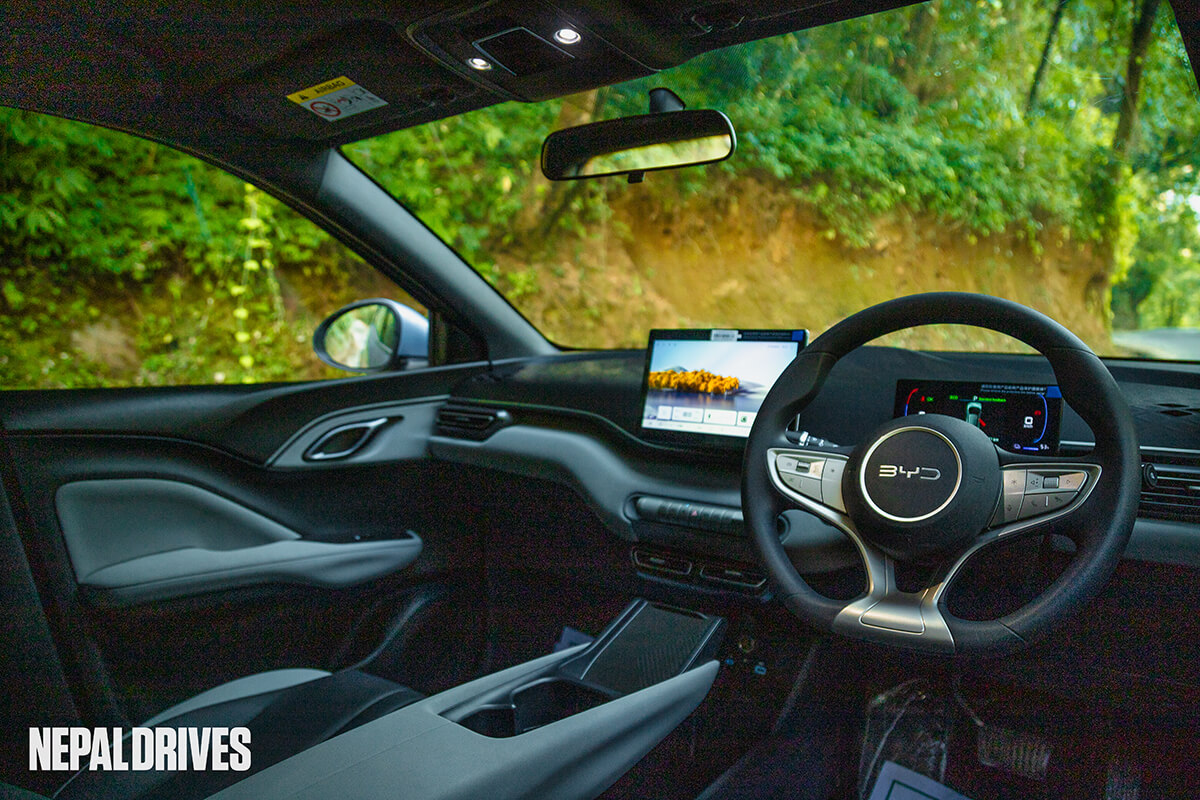
Although both available variants share the same fundamental dashboard design, a few important distinctions separate them in terms of features. The seats in both trims are finished in synthetic leather and feel reasonably comfortable for daily use.
However, the Premium variant steps things up with a 6-way electrically adjustable driver’s seat, whereas the Dynamic model makes do with a 4-way manual setup. The front passenger seat, regardless of trim, gets 4-way manual adjustment.
The steering column is another point of differentiation. In the Dynamic version, it offers basic 2-way adjustment, while the Premium expands that to a more flexible 4-way setup.
Beyond seating and steering adjustments, the Premium also includes extras such as wireless phone charging and one-touch up/down functionality with anti-pinch protection for the driver’s window — features not available in the Dynamic trim. Still, aside from these equipment changes, the overall cabin ambiance remains largely the same between the two.
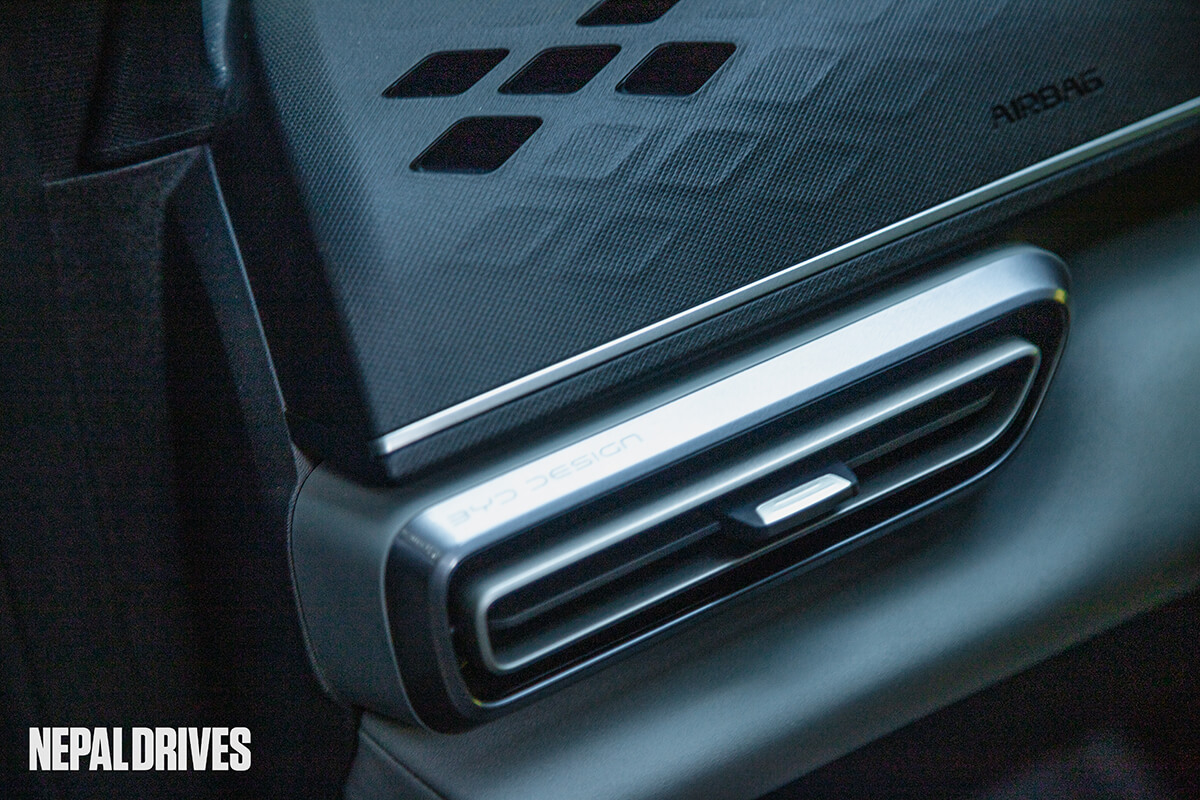
In terms of materials, the Atto 1 reflects its positioning as an entry-level EV. There’s a noticeable presence of hard plastics, some of which feel slightly coarse to the touch.
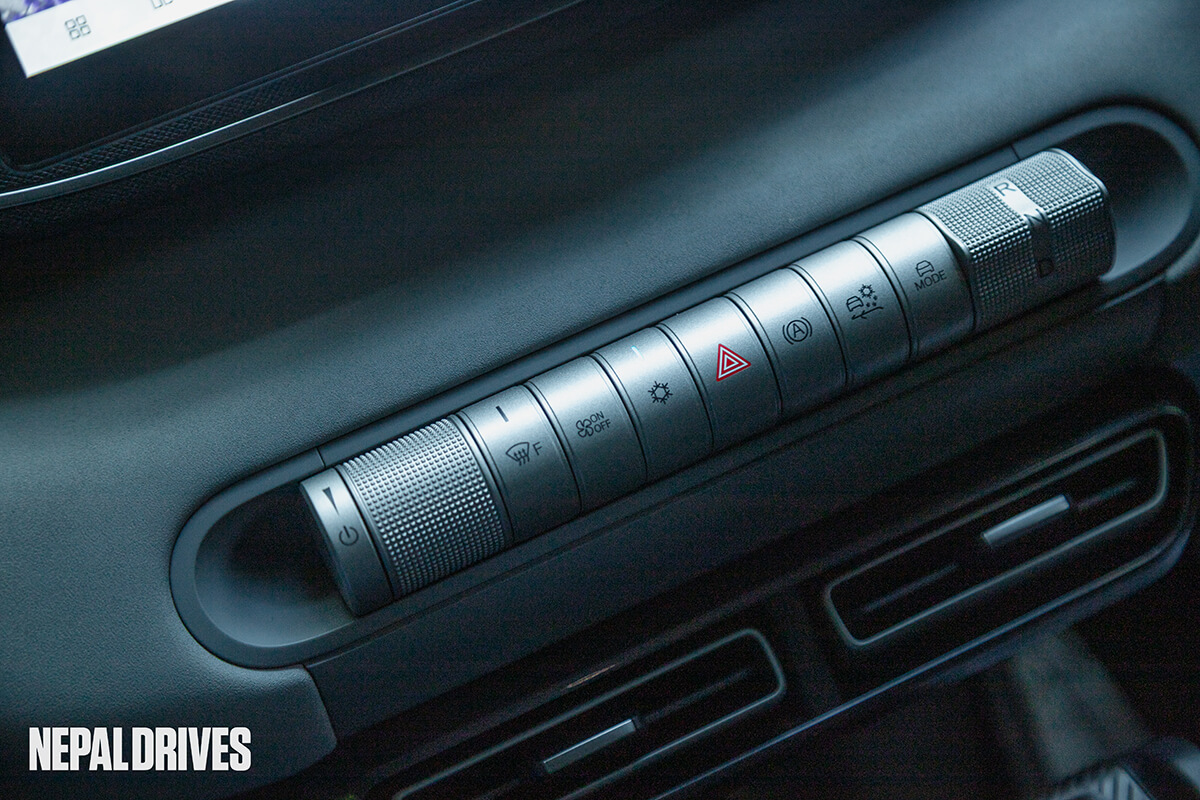
That said, BYD has balanced things out with soft-touch inserts in select areas. Interestingly, the rear section feels marginally better finished compared to the front. Up front, luxury isn’t really the priority — instead, the focus is on practicality, clean ergonomics, and a driver-oriented layout, which suits the car’s purpose well.
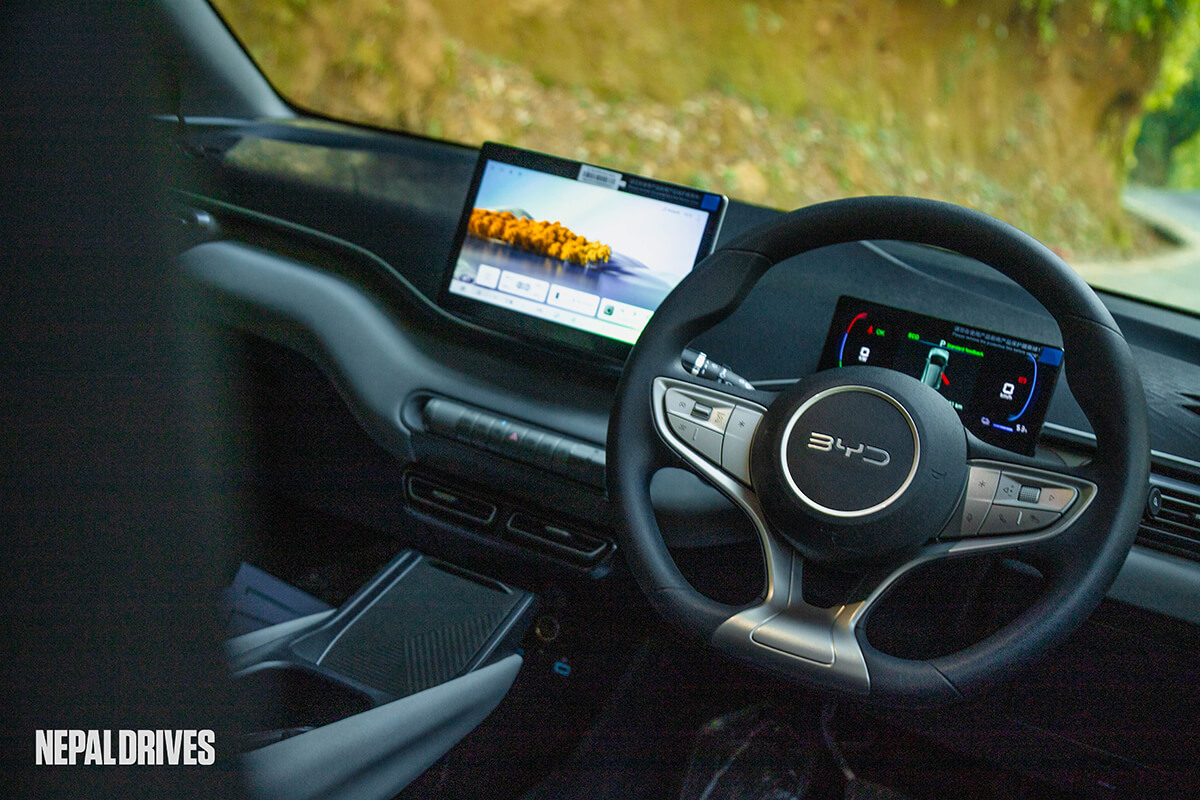
Dominating the dashboard is a 10.1-inch rotating touchscreen that manages most infotainment functions and supports both Apple CarPlay and Android Auto. Behind the steering wheel sits a 7-inch fully digital instrument cluster that clearly presents essential driving information.
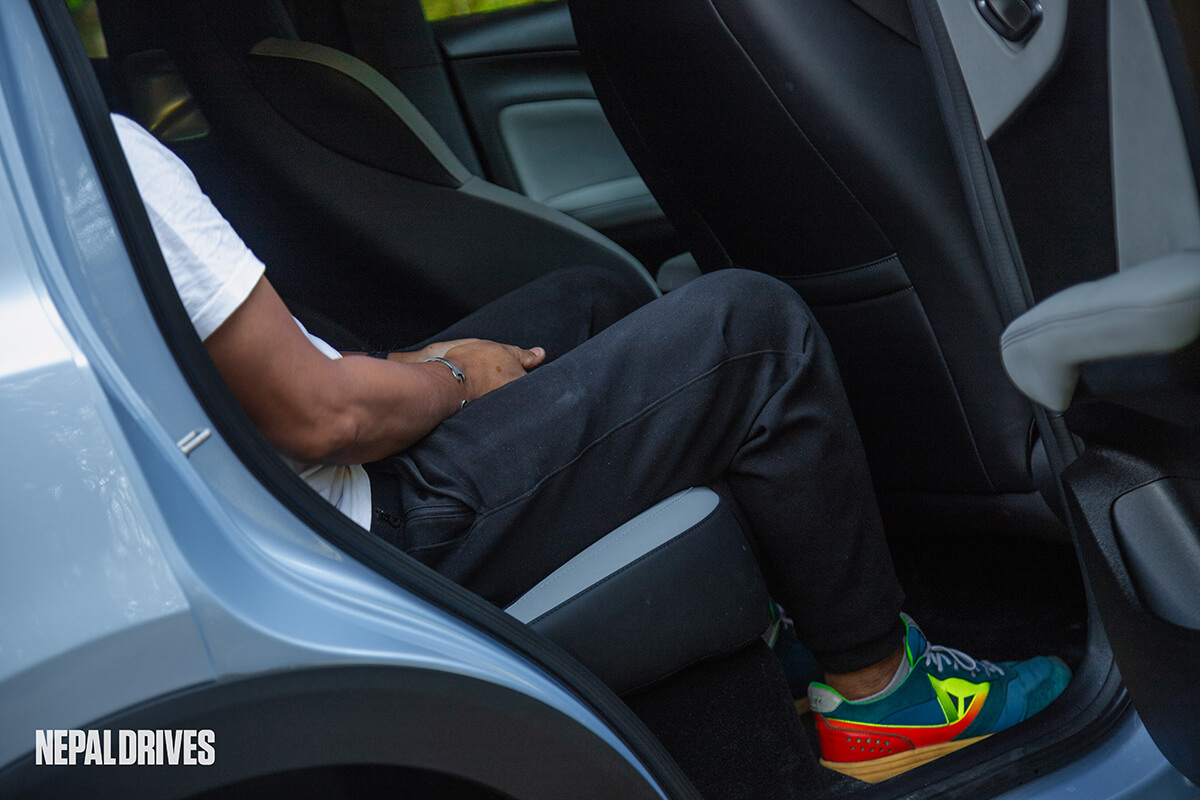
On the move, while you don’t get a 360-degree camera system, the rear parking camera offers good clarity, and outward visibility is impressive in all directions. Combine that with the car’s compact footprint, and the ATTO 1 delivers a driving experience that feels easy, manageable, and confidence-inspiring.
PERFORMANCE
Let’s quickly run through the key numbers.
Both variants of the BYD Atto 1 use the same Permanent Magnet Synchronous Motor, producing 45 kW of power and 135 Nm of torque. The difference lies in the battery: the Dynamic gets a 30.08 kWh pack with a WLTP-claimed 230 km range, while the Premium upgrades to a 38.88 kWh Blade battery offering a claimed 300 km.
With a 6.6 kW AC charger, the smaller battery takes about 5 hours to fully charge, while the larger one needs roughly 6.5 hours. DC fast charging is supported too — up to 30 kW in the Dynamic and 40 kW in the Premium — allowing a 20–80% top-up in around 40 minutes.
It has a top speed of 130 km/h and does 0–50 km/h in 5.5 seconds, making it brisk enough for city duties. Suspension is handled by McPherson struts up front and a torsion beam at the rear, and importantly, it comes with four-wheel disc brakes — a reassuring addition in this segment.
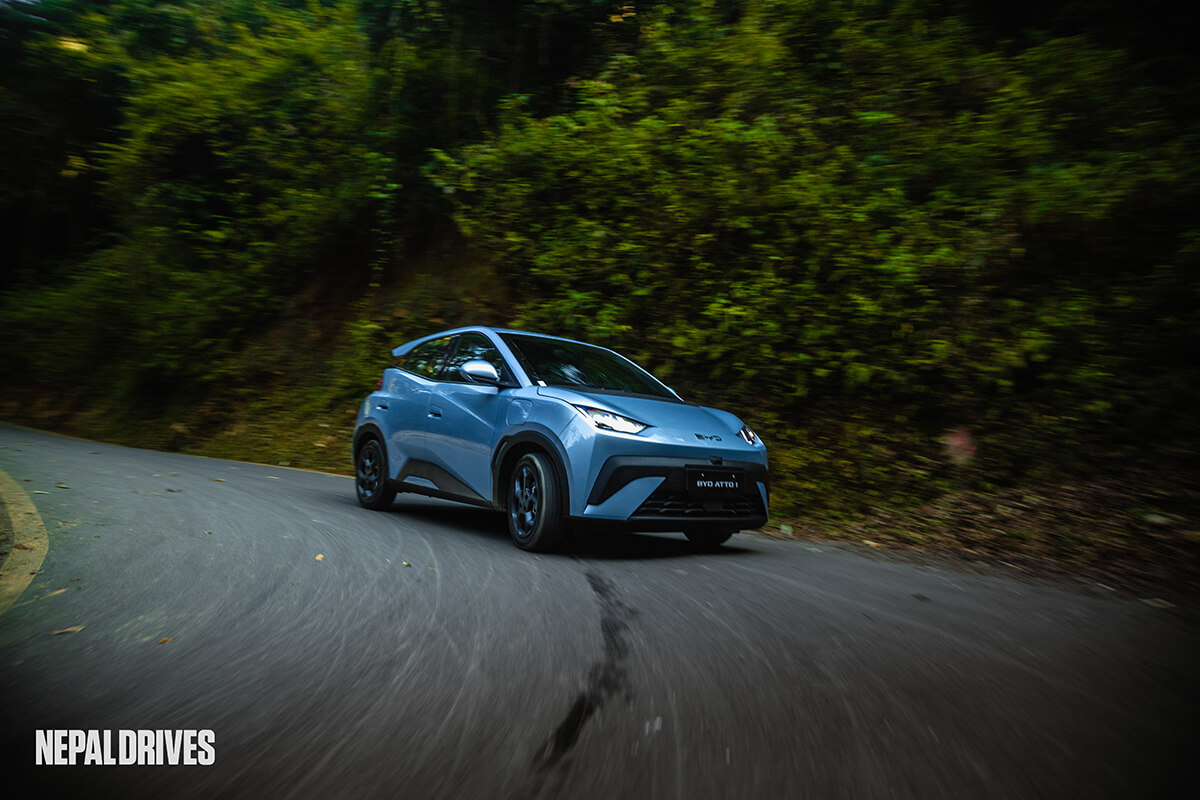
In terms of size, it measures 3925 mm long, rides on a 2500 mm wheelbase, offers 175 mm of ground clearance, and weighs between 1225 kg and 1280 kg depending on the variant.
Now, numbers only tell half the story — because how it feels from behind the wheel is what truly defines the Atto 1.
On paper, the 45 kW output didn’t sound very exciting. In fact, we initially thought it might feel underpowered. But out on the road, the Atto 1 genuinely surprised us.
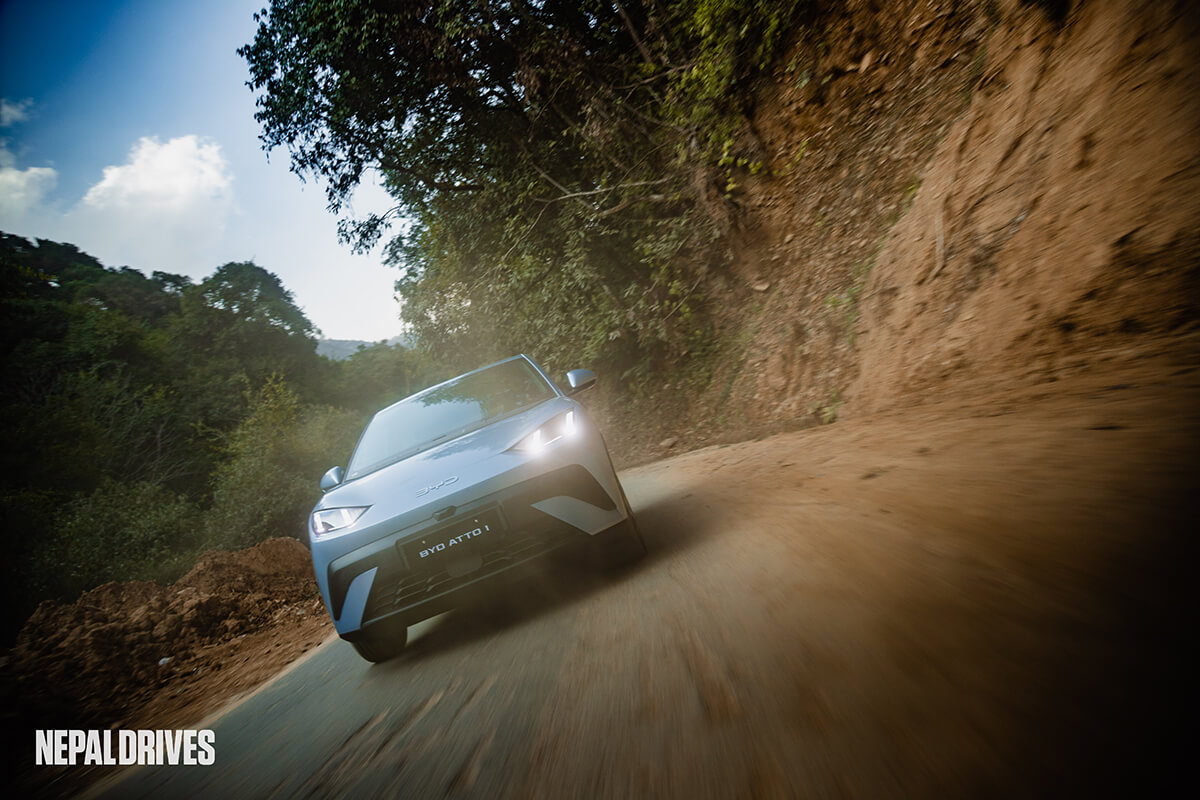
For everyday city duties — grocery runs, school drops, office commutes, quick meetings — you simply don’t need massive performance. And in that environment, the Atto 1 feels perfectly at home. It’s compact, easy to place on the road, effortless to squeeze into tight gaps, and extremely maneuverable.
That 0–50 km/h sprint in 5.5 seconds makes it unexpectedly lively in shallow traffic. It hops from one opening to another like a little overtaking bunny, which adds a fun layer to otherwise routine drives.
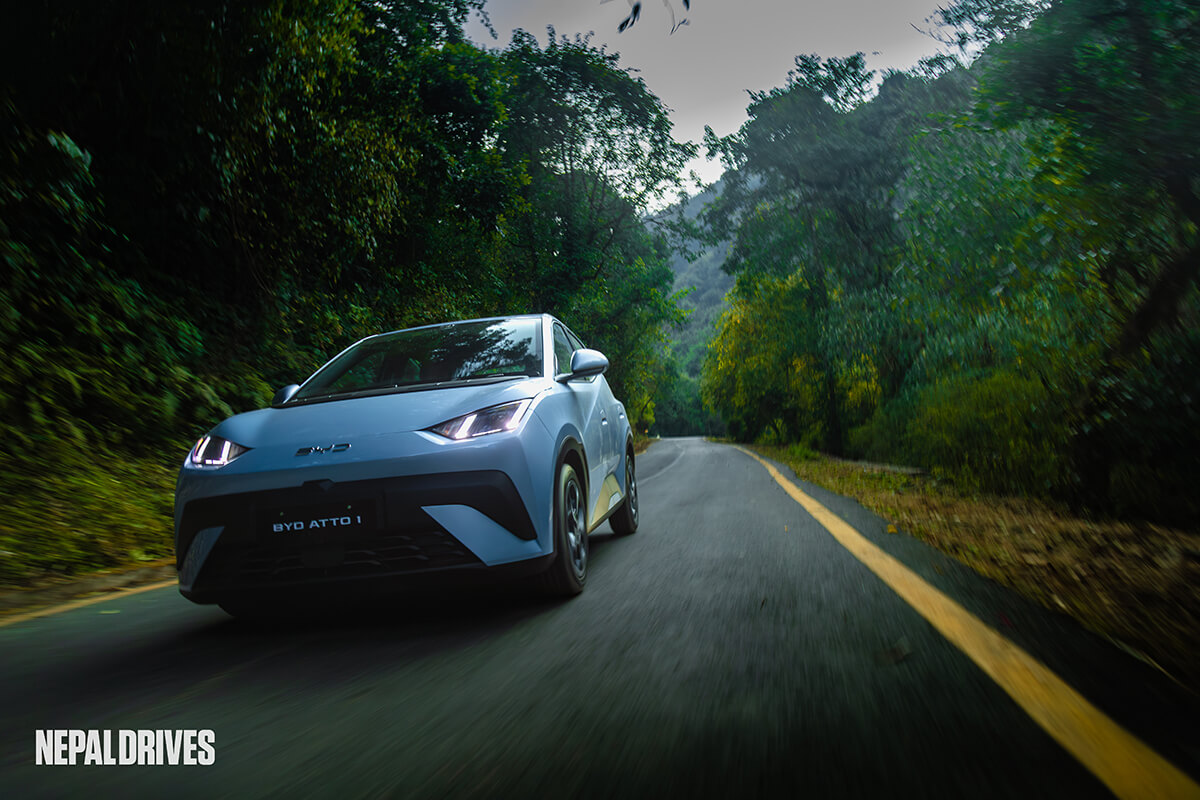
The steering does feel slightly on the heavier side at low speeds, which feels a bit unusual at first — but it’s never bothersome. Overall, city driving is smooth, predictable, and stress-free.
We drove the Atto 1 twice. The first drive was a typical urban run. The second is where things got interesting. We headed past Godawari and climbed toward Phulchowki — proper narrow, winding hill roads.
And that’s where the Atto 1 truly came alive.
Switch it into Sport mode and push it into tight tarmac corners, and suddenly that slightly weighted steering from the city makes perfect sense. The car feels planted. The steering is precise. It turns sharply and confidently on our narrow hilly roads. Its compact dimensions make it feel tailor-made for terrains like ours.
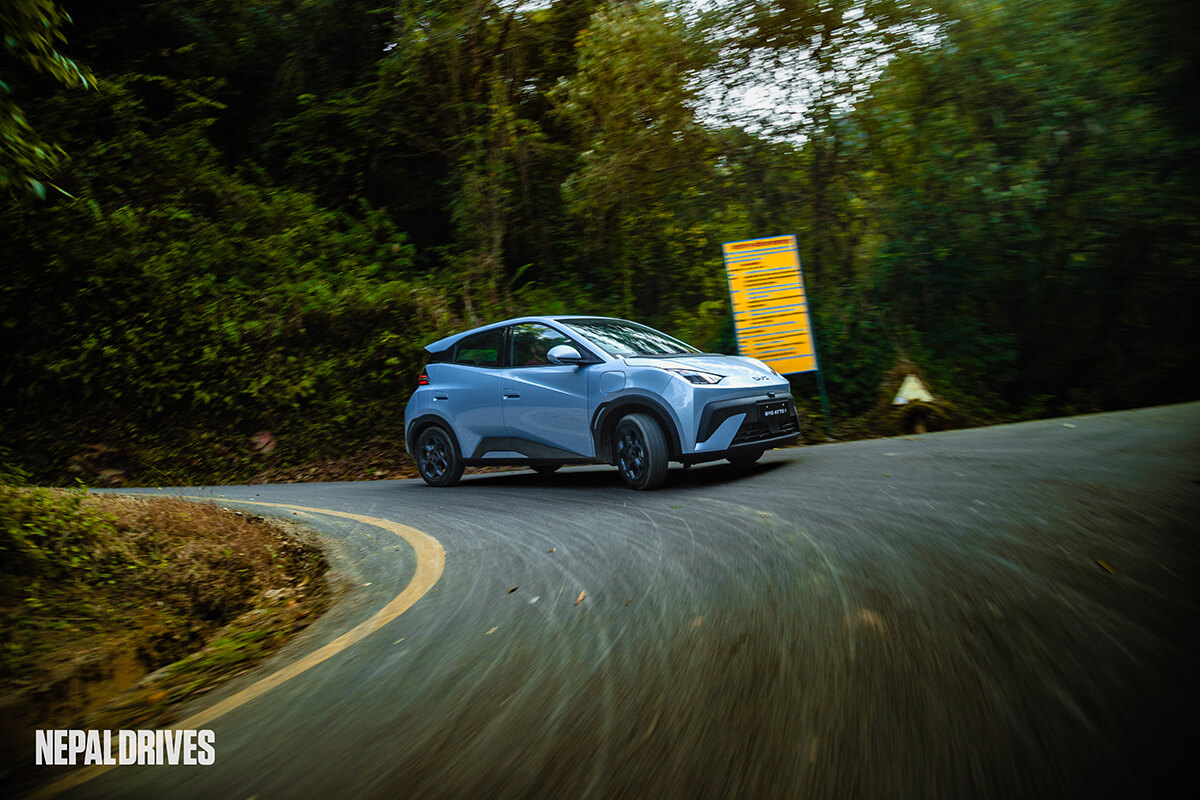
The suspension strikes a sweet balance — composed enough to absorb rough patches, yet communicative enough to give you feedback when you’re driving with intent. Yes, you could argue it doesn’t have big power figures. But our counterpoint? You can use all of it. Flat out. All the time. And that’s not something you can say about many EVs.
You can mash the throttle, enjoy the climb, attack corners with confidence — without ever feeling overwhelmed or intimidated. There’s no sense of excess power trying to throw you off balance. It’s a beautifully judged mix of weight, grip, and usable performance.
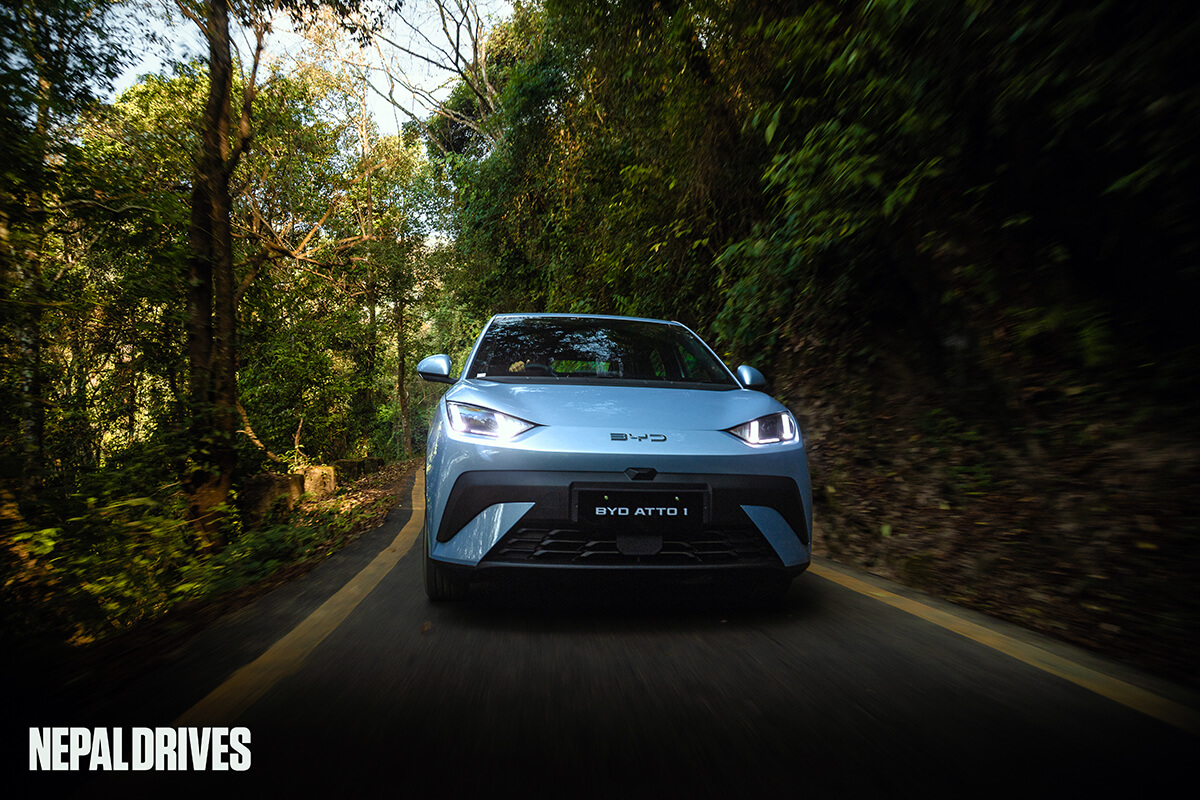
And when it’s time to slow down, the four-wheel disc brakes inspire confidence, delivering consistent and reassuring stopping power.
In fact, even after the shoot wrapped up, we kept doing uphill and downhill runs — purely for the fun of it. And honestly, that says more about the Atto 1 than any brochure figure ever could.
VERDICT
The BYD Atto 1 might not wow you with massive power figures or headline-grabbing specs, but that’s exactly why it works so well.
As a first car, it’s honestly one of the easiest recommendations we can make. It’s compact, unintimidating, simple to maneuver, and forgiving to drive. New drivers will appreciate how predictable it feels — light enough to control, quick enough to stay confident in traffic, and small enough to place accurately on narrow roads or in tight parking spots.
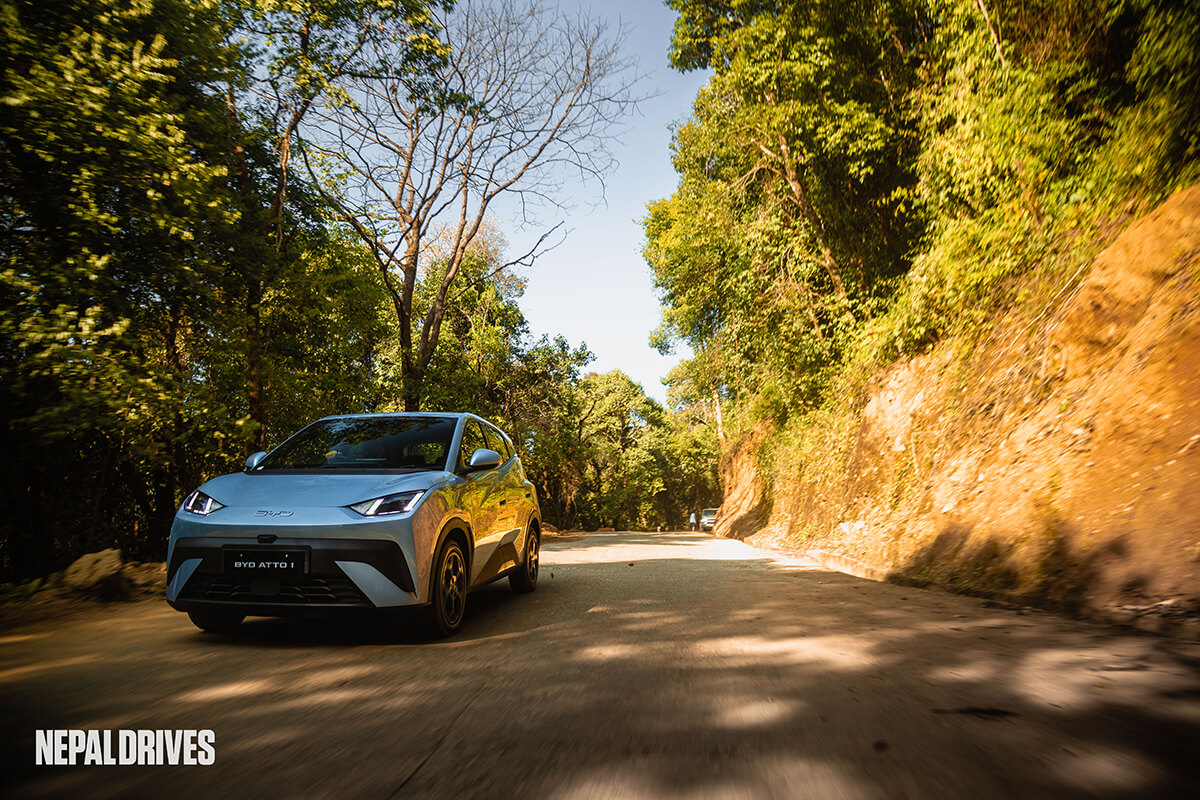
As a second car, it makes even more sense. If you already own a large EV SUV that feels bulky on narrow hill roads or stressful to push hard, the Atto 1 becomes your stress-free alternative.
You can actually use all of its performance without worrying about overpowering the chassis or feeling like you’re wrestling with weight. It’s playful, agile, and confidence-inspiring in a way many bigger EVs simply aren’t.
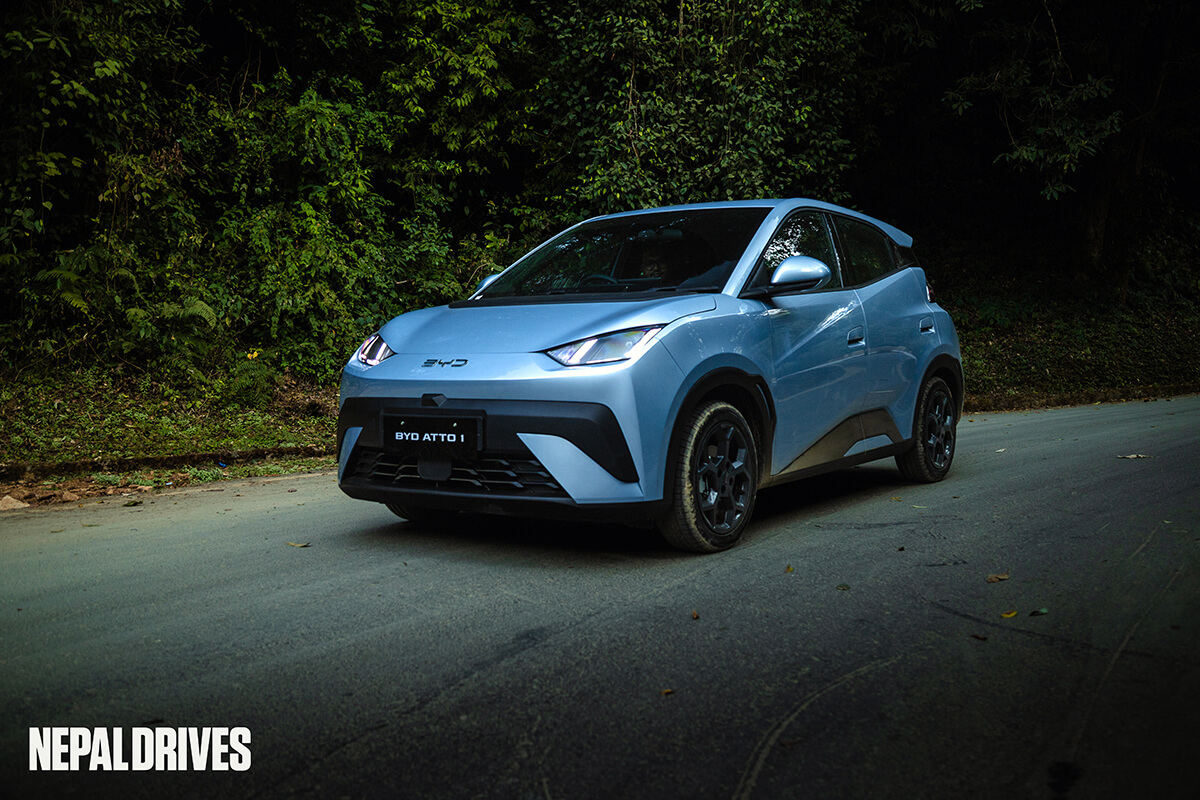
And as an only car, for many buyers in Nepal, it’s more than enough. It covers daily city needs effortlessly, handles hilly terrain with surprising composure, and offers a balanced blend of usable power, planted handling, and reassuring braking. It feels solid. It feels well-judged. And most importantly, it feels honest about what it’s trying to be.
The Atto 1 doesn’t try to be excessive — it tries to be usable. And in doing so, it ends up being genuinely fun for experienced drivers, while remaining approachable for first-timers.
Sometimes, the best cars aren’t the most powerful ones. They’re the ones you actually enjoy driving every single day.








CFMOTO 250 Dual: A Beginner ADV That Actually Makes Sense

BYD Atto 2: The EV That Gets It Right

iCaur V23: Bringer of Smiles